Polyethylene is a durable material, and MBBR media performs well for many years under normal conditions. But how many years exactly depends on what the media is made of, how hard your aeration runs, what chemicals it is exposed to, and how much mechanical wear it experiences. Here is a practical look at each factor and the signals that tell you replacement is worth considering.
What Determines How Long MBBR Media Lasts?
Four variables drive media aging. None operates in isolation, but understanding each helps you identify which ones matter most for your specific system.
1. Base Material Quality
The starting material sets the ceiling on how long your media can last. Virgin HDPE has long polymer chains and manufacturer-added UV stabilizers that resist degradation. Recycled HDPE starts with shorter chains and an unknown additive history, making it more vulnerable to stress cracking and embrittlement. Two pieces of media in the same reactor, one virgin and one recycled, will age at different rates from day one. We cover this in more detail in our comparison of virgin HDPE and recycled HDPE MBBR media.
2. Aeration Intensity
MBBR media spends its life in constant motion. Every collision between carriers removes microscopic material from the surface. Over years, these collisions accumulate into measurable wear. Higher aeration rates keep media fluidizing evenly but also increase collision frequency and force. Systems running with aggressive mixing tend to show surface wear sooner. This is a tradeoff inherent to MBBR design: better biological performance comes with faster carrier aging.
3. Chemical Environment
UV exposure is the most aggressive degradation driver for outdoor reactors. Polyethylene absorbs ultraviolet radiation and becomes progressively more brittle. Sustained low pH can also degrade the polymer surface over time. Chemical oxidants used for disinfection — chlorine, hydrogen peroxide, ozone — attack polymer chains directly. Even at low concentrations, repeated exposure compounds over years of operation.
4. Mechanical Wear
Abrasive suspended solids, particularly sand or grit, act like sandpaper on media surfaces during fluidization. This is most common in industrial plants or systems without adequate primary treatment. Media that gets drawn into pump intakes or trapped against retention screens can suffer localized damage. Over time, irregularly shaped carriers may pass through screen openings originally sized for intact media.
Three Signs That MBBR Media Needs Replacing
You do not need lab analysis to assess media condition. Three observable signals indicate when replacement is worth evaluating.
1. Visual Changes
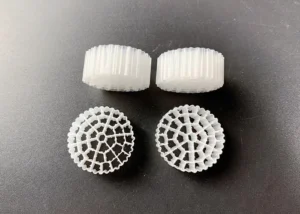
Fresh media has a smooth surface and uniform color. As it ages, the surface becomes rough, pitted, or chalky. Color changes toward yellow or white in black media suggest UV or thermal damage. Rounded edges mean abrasion has been occurring. These changes alone do not mean the media has failed, but they signal that closer monitoring is warranted.
2. Physical Damage or Fragmentation
If you find plastic pieces in your retention screen area or downstream, your media is breaking down. Cracking, chipping, and fragmentation are unambiguous signs that replacement should be on your planning horizon. A subtler indicator: the media level in your reactor is slowly dropping. If the bed height has decreased and you have ruled out washout, each carrier weighs less than it originally did, meaning available surface area for biofilm is also decreasing. For guidance on evaluating new media, see our MBBR media selection and specification verification guide.
3. Treatment Performance Decline
If ammonia removal has been trending downward over several months and you have ruled out temperature shifts, DO limitations, toxic shock, or loading increases, the media itself may be reaching end of life. Biofilm attachment becomes less stable on worn surfaces, and the same media fill volume no longer achieves the removal rates it did a year earlier with identical conditions. At this point, replacement is an economic decision: the cost of lost treatment capacity against the investment in new media.
Conclusion
MBBR media is a durable product. In most well-operated systems, it provides years of reliable service. But operating conditions vary, and so does lifespan. Inspect your media visually at least once per year, track treatment performance month over month, and know what material your media is made of from day one. These three practices give you the information you need to decide when replacement makes sense for your specific system.