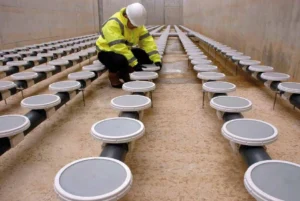
Every fine bubble diffuser runs on a rubber membrane — the thin “skin” that turns compressed air into a cloud of tiny bubbles. When it wears out (and it always does), you face the same choice: replace it with EPDM or with silicone? Both do the same job, but they are not the same rubber — and picking the wrong one quietly costs you money for years.
Here’s the good news: you don’t need a chemistry degree to get this decision right. This guide explains what EPDM and silicone actually are, where each one shines, and how to match the membrane to your water — so your blower stays efficient and your replacement budget doesn’t leak.
What Is the Difference Between EPDM and Silicone Diffuser Membranes?
EPDM (you don’t need to remember the full name) is the workhorse rubber of the aeration world. It’s tough, elastic, and inexpensive, and it handles normal municipal and industrial wastewater very well. That’s why it’s the default choice on most fine bubble systems — including the parts that make up a typical aeration system.
Silicone is a different rubber. It costs more, but it shrugs off the things that wear EPDM down: oils, greases, aggressive chemicals, and the mineral scale that builds up in hard water.
That’s the whole difference in one sentence: EPDM is the cheaper rubber that’s great in normal water. Silicone is the pricier rubber that survives the rough stuff. Neither is “better” — they’re two tools for two different jobs.
| EPDM | Silicone | |
|---|---|---|
| Cost | Lower | Higher |
| Normal wastewater | Excellent | Good |
| Oils, grease, chemicals | Moderate | Excellent |
| Hard-water scaling | Scales faster | Resists scaling |
| Where it shines | Everyday treatment plants | Food plants, hard water, tough loads |
Which Membrane Is More Efficient: EPDM or Silicone?
The whole job of a fine bubble membrane is to get oxygen into the water — that’s what the bacteria eat. Efficiency here means: how much of the oxygen you’re paying for with your blower actually ends up dissolved in the water.
In clean, normal conditions, EPDM is the more efficient of the two — you get a little more oxygen into the water for the same amount of blower air. If your water is fairly clean and your blower energy bill is the number that keeps you up at night, EPDM is the energy-savvy pick.
But here’s what the sales brochures leave out: that efficiency is a starting point, not a guarantee. What really matters is how the membrane performs after a year or two in your water. And that’s where the second question comes in.
Which Membrane Holds Up Better in Hard Water and Heavy Scaling?
In plants with hard water, minerals slowly build up on the membrane surface — think of the scale inside a kettle. That scale closes up the tiny slits the air escapes through. Your blower has to push harder, the bubbles get bigger, and the oxygen savings quietly evaporate. By the time you notice the pressure creeping up, you’ve already paid for it in wasted energy.
This is where silicone earns its higher price tag. Independent studies and field experience consistently show that under hard-water conditions, silicone membranes keep their performance far longer than EPDM — EPDM fouls faster, then runs harder and costs more as it scales. In a plant with known hardness or scaling problems, silicone usually pays for itself well before the first membrane change.
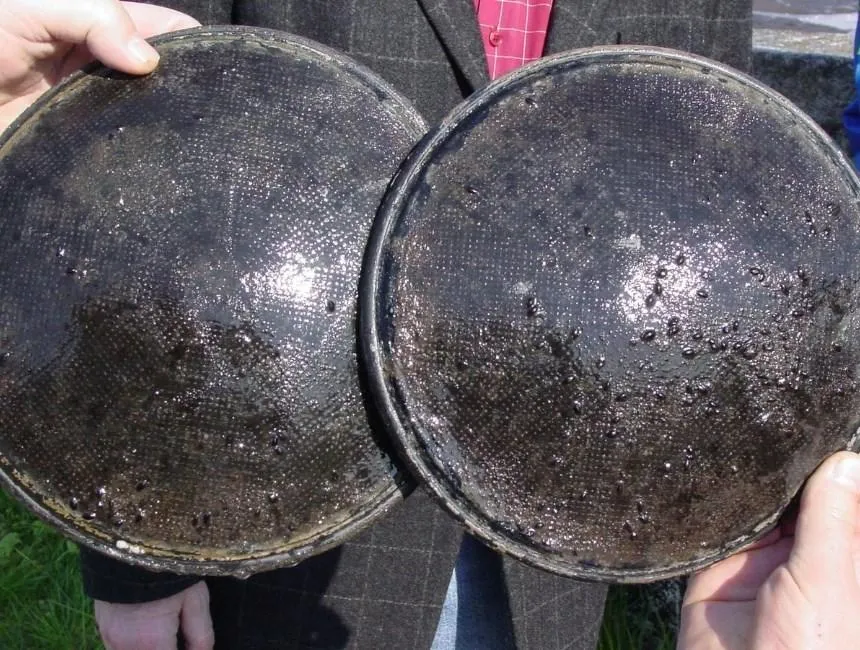
So if your plant already fights mineral build-up, or your water report shows high hardness, that’s a strong signal to go silicone even though it costs more up front.
EPDM or Silicone: How Do You Actually Choose?
Skip the “it depends” answer. Here’s a practical shortcut based on the conditions most plants actually face:
| Your situation | Pick |
|---|---|
| Normal municipal or industrial wastewater, moderate hardness | EPDM |
| Hard water or known scaling problems | Silicone |
| Oils, grease, or aggressive chemicals (food, beverage, rendering) | Silicone |
| Tight budget, clean water, want the lowest replacement cost | EPDM |
| Hot water or regular chemical cleaning | Silicone |
If you have a water report — most plants do — the hardness line settles most of the decision for you. High hardness points to silicone; normal water points to EPDM. And if you’re genuinely unsure, talk to your supplier about what’s in your water: a supplier who asks about your hardness and load instead of pushing one product is one worth keeping.
How Can You Tell It’s Time to Replace the Membrane?
Membranes don’t fail all at once — they fail slowly, and your hands and eyes can spot it early. Look for these signs:
- The rubber feels hard and stiff instead of soft and springy when you press it.
- You can see cracks or a chalky scale coating on the surface.
- Your blower is working harder — the pressure gauge reads higher than it used to.
- The bubbles look bigger than they should, or there are dead spots where little air comes up.
When you see these, it’s time to plan a replacement. The good news: you replace the membrane, not the whole diffuser — that’s a fraction of the cost. And when you buy a fine bubble system, it’s worth confirming that replacement membranes are actually available for that model, so you’re not locked into a dead end a few years down the road.
Conclusion
EPDM is the efficient, budget-friendly choice for normal water. Silicone is the longer-lasting choice for hard water, oils, and aggressive chemicals. Most of the time the decision isn’t about which rubber is “better” — it’s about knowing what’s in your water. Match the membrane to that, and you’ll spend less over the life of the system.